Starfish, anemones protect ecosystems from climate change

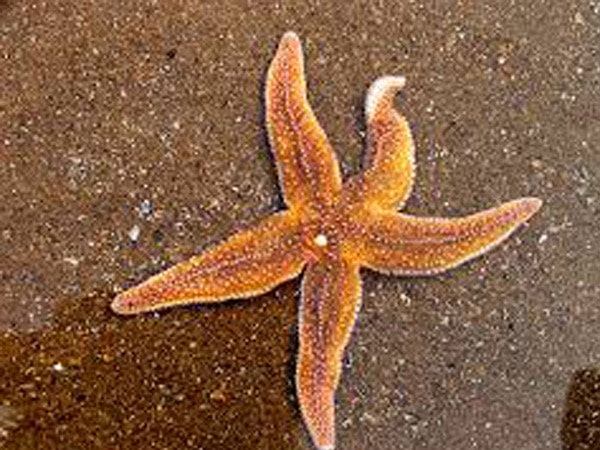
Washington D.C. [U.S.A.], October 12 (ANI): Limpets, mainly starfish, anemones, mussels, barnacles and seaweed are important to help ecosystems survive the global warming, finds a recent study, which offers some hope for a defence strategy against the climate change.
Researchers have found that in the summer, when temperatures were at their warmest, communities starfish, anemones, mussels, barnacles and seaweed could fare well even if they were heated, but only if limpets were present.
Lead author Rebecca Kordas from the Imperial College, London said that the herbivores created space for other plants and animals to move in and the researchers saw much more diversity and variety in these ecosystems.
"We want a variety, because we found it helps protect the ecosystem when you add a stressor like heat," Kordas added.
The team created mini-marine ecosystems on the shore of Ruckle Park on British Columbia's Salt Spring Island.
The mini ecosystems were built on hard plastic plates that allowed the researchers to control the temperatures.
Some of the plates allowed voracious herbivores called limpets in, and some kept them out. Limpets are like snails, but with a cone-shaped shell.
The team was studying life in the intertidal zone, the area of the shore between the low tide and the high tide.
As the tide moves in and out, the plants and animals must cope with huge variation in temperature every day, sometimes as much as 20 to 25 degrees Celsius.
"These creatures are already living at their physiological limits, so a two-degree change - a conservative prediction of the warming expected over the next 80 years or so - can make a big difference," said Kordas.
"When limpets were part of the community, the effects of warming were less harsh," she said.
Senior author Christopher Harley from the University Of British Columbia in Vancouver, Canada said that consumers like limpets, sea otters or starfish are very important to maintaining biodiversity, especially in aquatic ecosystems. Losing these species can destabilise ecosystems, but by the same token, protecting these species can make ecosystems more resilient.
"We should be thinking of ways to reduce our negative effects on the natural environment and these results show that if we do basic conservation and management, it can make a big difference in terms of how ecosystems will weather climate change," Harley added.
(ANI)
This story has not been edited. It has been published as provided by ANI
Top Headlines